

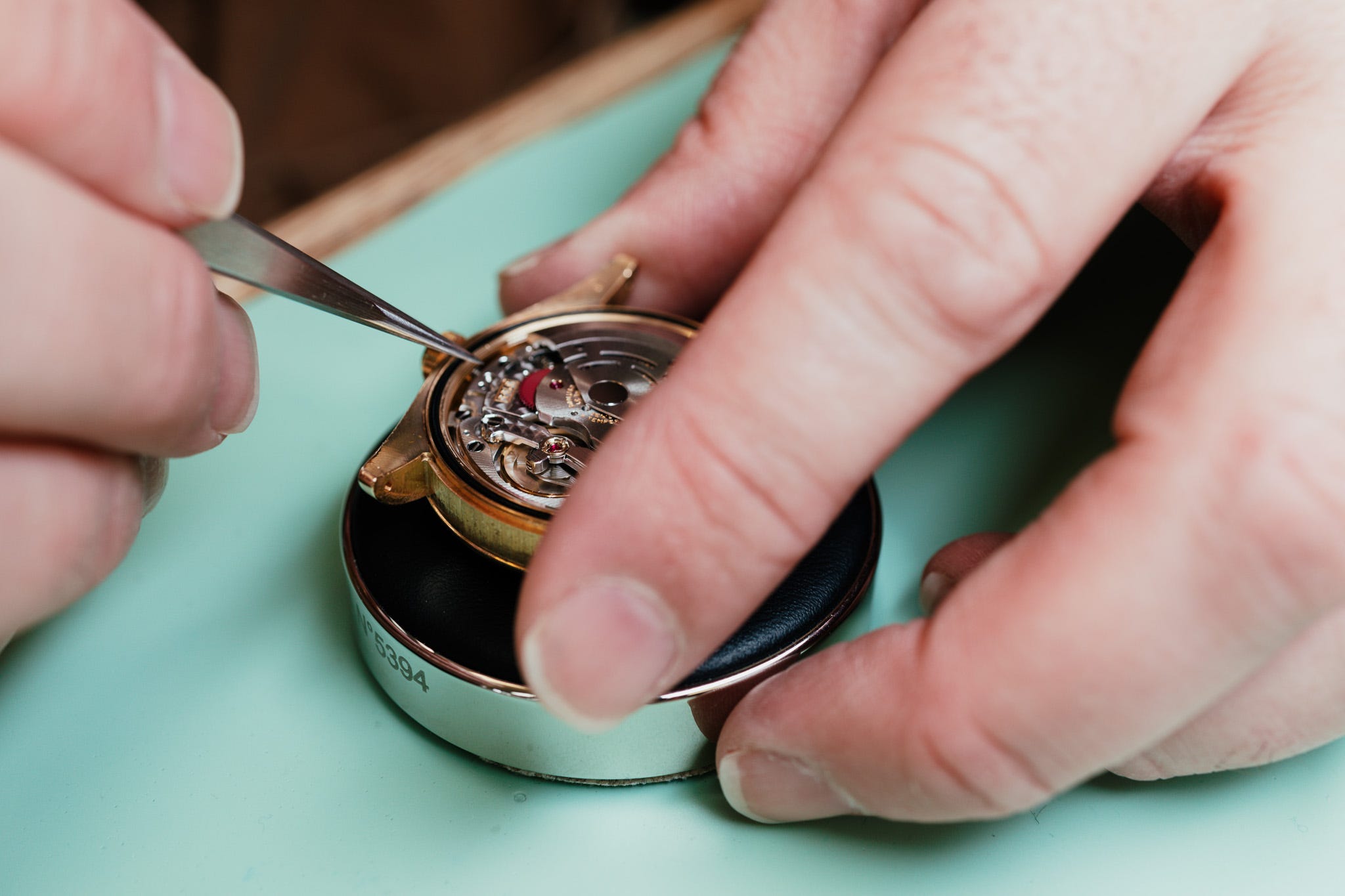
The case back comes off, revealing gears, synthetic rubies, and wound springs. Behind the dial sits a tiny machine built to resist the inevitable forces of friction and gravity.
Donovan Paradise points to the steady oscillation as he examines the movement through his loupe. “You see that balance wheel going back and forth like a heartbeat? It doesn’t matter that the most accurate watch is digital, with no moving parts. Mechanical watches are fighting physics, on a miniature level. There’s something about the strive for perfection that does something to us as human beings.”
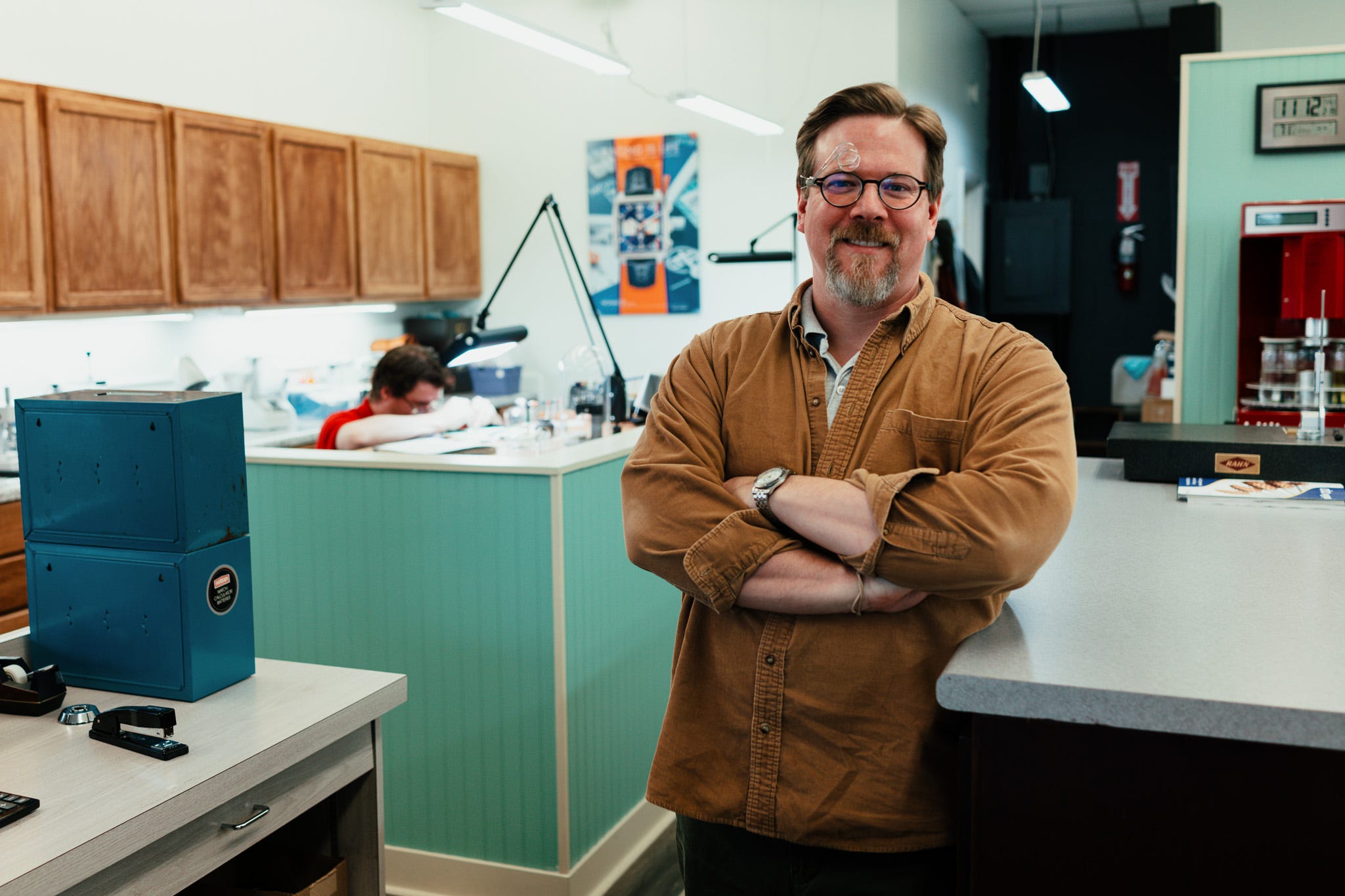
Paradise Time Service sits in an unassuming strip mall on the north side of Fort Wayne. Foot traffic is steady — a trickle of largely senior customers in need of $15 battery swaps. Breaking the rhythm, a high-end watch dealer arrives with a vintage Omega for service before listing it for sale. Donovan jokes he should have a desk there — his “second home.”
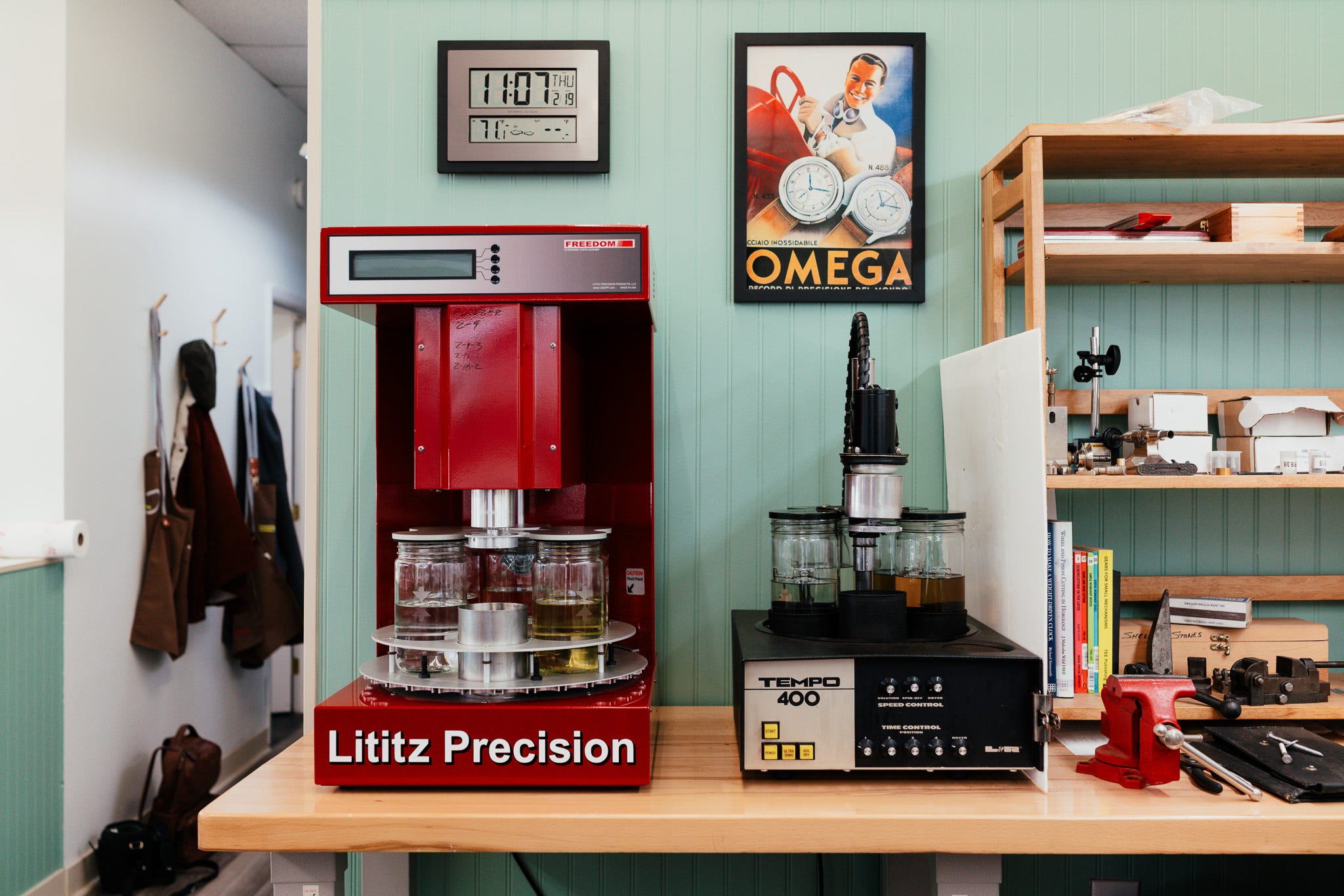
A Rolex Datejust sits on the timegrapher, its accuracy measured before being shipped back to its owner in Alabama. “This city is not a huge market. It’s big enough that we can operate out of it, but supplement with things from around the country. Thankfully, we’ve had a niche with vintage chronographs, and Omega more specifically.”
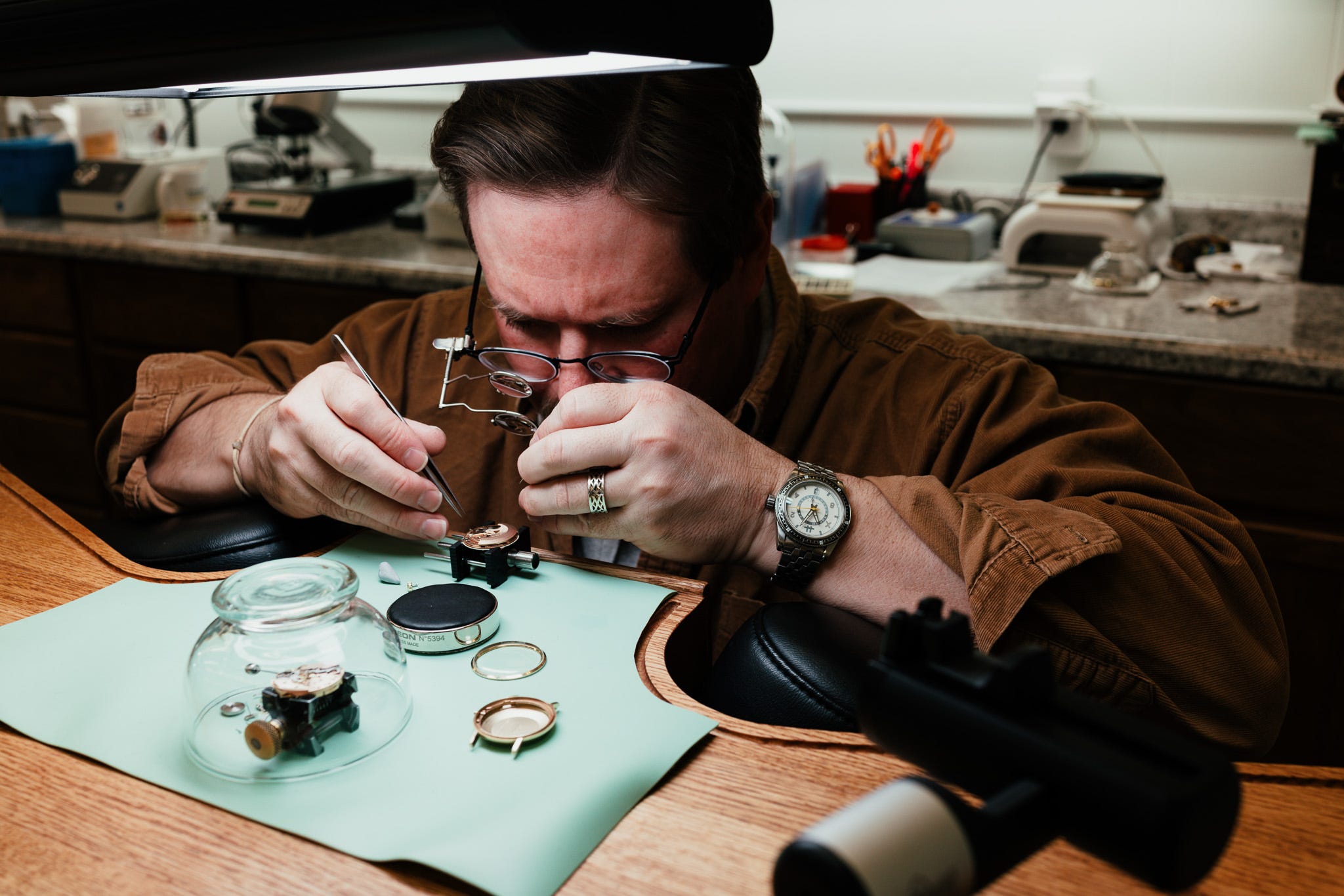
Donovan operates in rarified air — one of roughly three hundred watchmakers nationwide to hold the CW21 certification from the American Watchmakers–Clockmakers Institute. “To have a Rolex account, you had to be a CW21-certified watchmaker,” he explains. “It’s a grueling exam, spread across three days. It consists of written theory and a hands-on mechanical, servicing a 7750 chronograph. Of course, they introduced all kinds of errors. There was a micromechanics portion where you had to service a 6497 basic manual line pocket watch size, but we had to cut the balance staff out, take the measurements, install a new staff, do poising, dynamic poising, truing, etc. There’s something like an 80% failure rate.”
Although not from a family of watchmakers, Donovan came by his fascination with mechanics honestly. “My father was a toolmaker, my grandfather was a toolmaker, my great-grandfather was a toolmaker. I worked for them for four years and decided I wasn’t going to stay there forever. I really liked mechanical things, and I really liked making small parts.”
He found his way to horology through Watchmaking, George Daniels’ landmark book on building a mechanical watch entirely by hand. Daniels, regarded as one of the greatest watchmakers of the modern era, helped revive interest in handmade mechanical watches at the highest level. “I wasn’t somebody who got into watches for the looks,” Donovan says. “I wasn’t interested in the Speedmaster because of the moon landing.”
Though brand prestige may not be Donovan’s primary motivation, he doesn’t ignore the pull of history and lineage while working on these tiny, improbable machines. “A guy brought in a pocket watch — I think it was a Waltham, could have been an Elgin — from the late 1800s. His great-great-grandfather was the tribal chief of a Native American tribe in the area. That watch was present at negotiations with the U.S. government to establish their reservation. It was an artifact of his people from a significant moment in their history. When I handed it back to him and he saw it run for the first time, it was emotional. I felt honored that I got to be a part of that.”
Quartz watches solved many of the challenges of timekeeping decades ago. Smartwatches eliminated them entirely. Yet mechanical watches persist, sometimes requiring intervention beyond routine service.
“Fabricating parts can be difficult,” Donovan says. “Often you don’t know exactly what grade of steel or brass the original manufacturer used. If the material is too soft, it will wear prematurely. Too hard, and it will cause wear to other components. There’s experimentation. There’s delicacy in getting the fit right. At any stage, it can go wrong. You can make it all the way to the end — a week and a half in — get the temper wrong, and you’re starting over. It brings me back to my machining background, which I absolutely adore. Those are the most challenging, but also the most rewarding.”
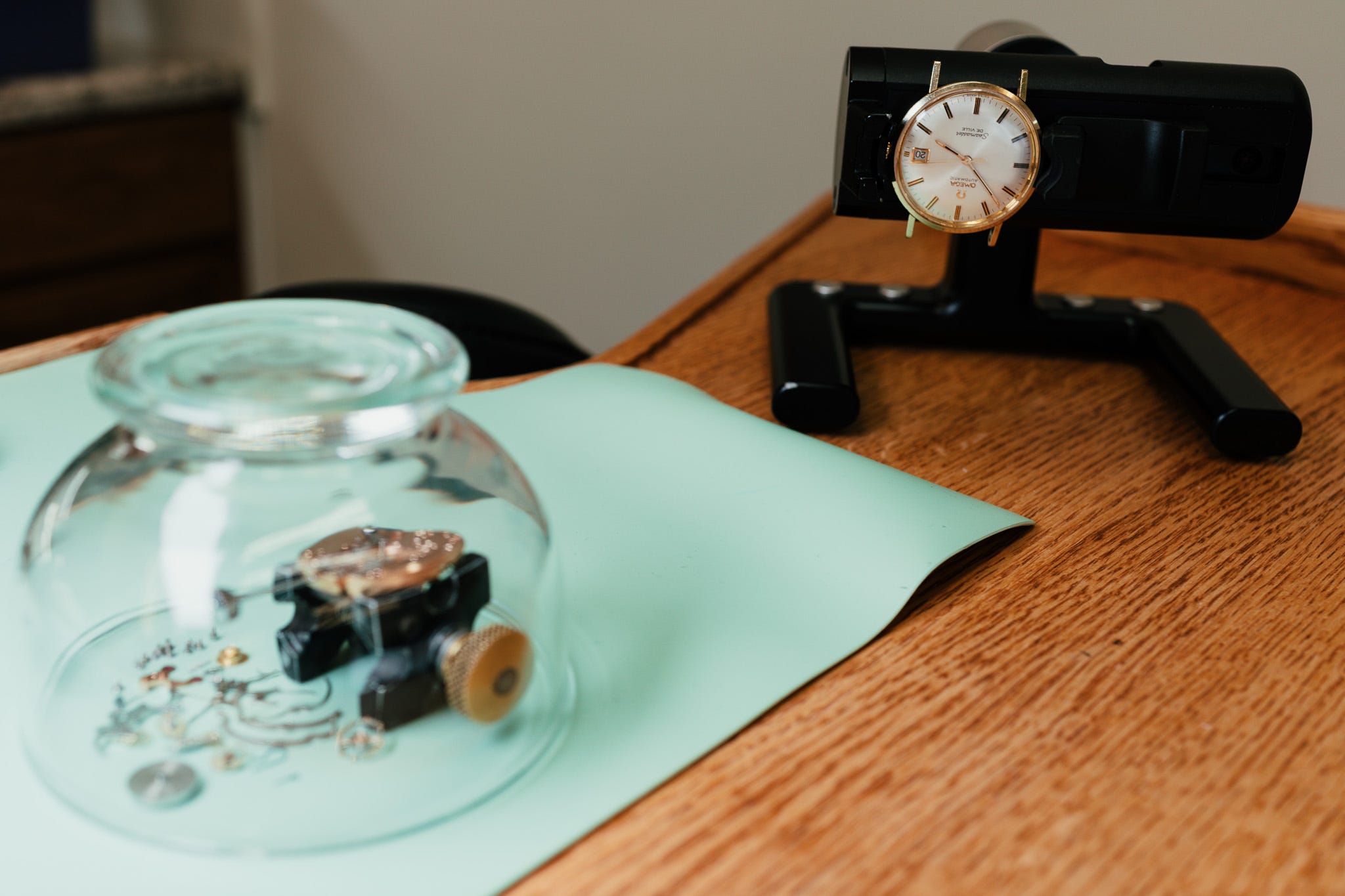
“Challenging, but rewarding” could be a mantra for anyone who cares for one of these machines. Mechanical watches demand regular service. They must be wound, positioned carefully at rest, their crystals polished, their movements cleaned and adjusted. The responsibilities are real, but they haven’t deterred renewed interest.
“We saw, especially during COVID, a huge uptick in vintage chronographs,” Donovan says. “We’re also seeing an increase in the higher-end market.”
On the bench, the balance wheel continues to spin, maintaining its fragile equilibrium. Donovan steps away to greet a customer looking for a new band. After a brief exchange and leather selection, he returns, his attention narrowing once again to the movement.
He makes a small adjustment and watches as it steadies. The oscillation continues.